
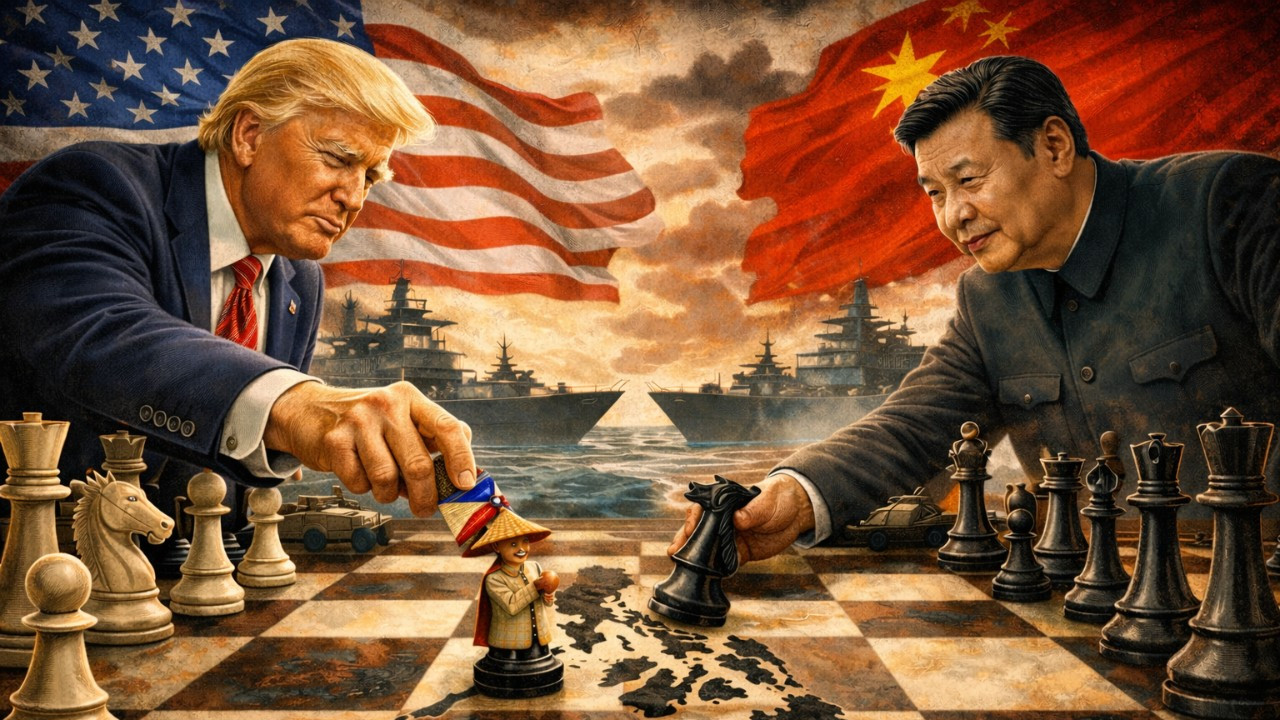
Are We a Strategic Ally or a Strategic Pawn?
For decades, Filipinos have been told that we are a “strategic ally.” It sounds flattering. It suggests equality, respect, shared interests, and mutual defense. But when we strip away the diplomatic language and look at our history and present reality, a harder question emerges. Are we truly an ally, or are we merely a strategic pawn on a larger chessboard controlled by foreign powers?
An ally has a voice. A pawn is moved.
The Geography Curse
The Philippines did not choose to be important. Geography chose it for us.
We sit at the crossroads of the Pacific. Near Taiwan. Facing the South China Sea. Close to major shipping lanes and military flashpoints. Because of this, powerful nations see us not as a people with aspirations, but as a position on a map.
Military bases, rotational forces, defense agreements, joint exercises. These are always justified as “for our protection.” Yet the uncomfortable truth remains. If war erupts between superpowers, it will not be Washington, Beijing, or any distant capital that burns first. It will be Filipino soil.
Strategic value without sovereignty is not power. It is vulnerability.
From Colony to Convenience
Our history should have taught us to be cautious.
Spain ruled us for centuries. When Spain fell, we did not gain freedom. We were sold. The United States arrived speaking of liberation, but stayed as a ruler. They trained our institutions, shaped our military, and designed our political system in their image. Independence came later, but influence never truly left.
Today, the control is quieter. It comes through agreements, aid, military dependence, and economic pressure. We are told what is “realistic,” what is “acceptable,” and what would anger our so-called partners.
An ally can say no. How often do we?
Whose Interests Come First?
Ask a simple question. When decisions are made, whose interests are prioritized?
When foreign troops rotate through our bases, are Filipinos safer, or are we just closer to the front line? When tensions rise in nearby regions, do we gain protection, or do we become a convenient launchpad? When policies are shaped to “maintain regional stability,” does that stability serve Filipino farmers, workers, and fishermen, or global power balances?
True alliances are symmetrical. Sacrifice flows both ways. Risk is shared equally. But in reality, the risks seem to concentrate here, while the strategic benefits flow outward.
The Cost of Dependency
A pawn does not think for itself. It waits to be moved.
Military dependency weakens our ability to act independently. Economic dependency limits our policy choices. Political dependency erodes our confidence as a nation. Over time, we stop asking what is best for the Philippines, and start asking what will be approved by others.
This is the most dangerous loss of all. Not territory. Not resources. But national self-belief.
A nation that doubts its own capacity will always accept a subordinate role.
Nationalism Is Not Isolation
Let this be clear. Questioning foreign influence does not mean hatred of other nations. Nationalism is not isolationism. Wanting sovereignty is not extremism.
We can trade with all. Speak with all. Cooperate with all. But we must belong to none.
An independent foreign policy means we decide based on Filipino interests first. Not American interests. Not Chinese interests. Not anyone else’s strategic games.
Friendship is welcome. Subservience is not.
From Pawn to Player
The tragedy is that the Philippines has potential. A young population. A strategic location. Rich culture. Resilient people. We could be a regional player, a mediator, a bridge. But that requires courage from our leaders and awareness from our people.
We must stop mistaking proximity to power for power itself.
Until we can say no without fear, decide without permission, and act without looking over our shoulder, the question will remain unanswered.
Are we a strategic ally?
Or are we still a strategic pawn, valuable only because of where we stand, not who we are?
The answer depends on whether Filipinos choose dignity over dependency, and sovereignty over comfort.