
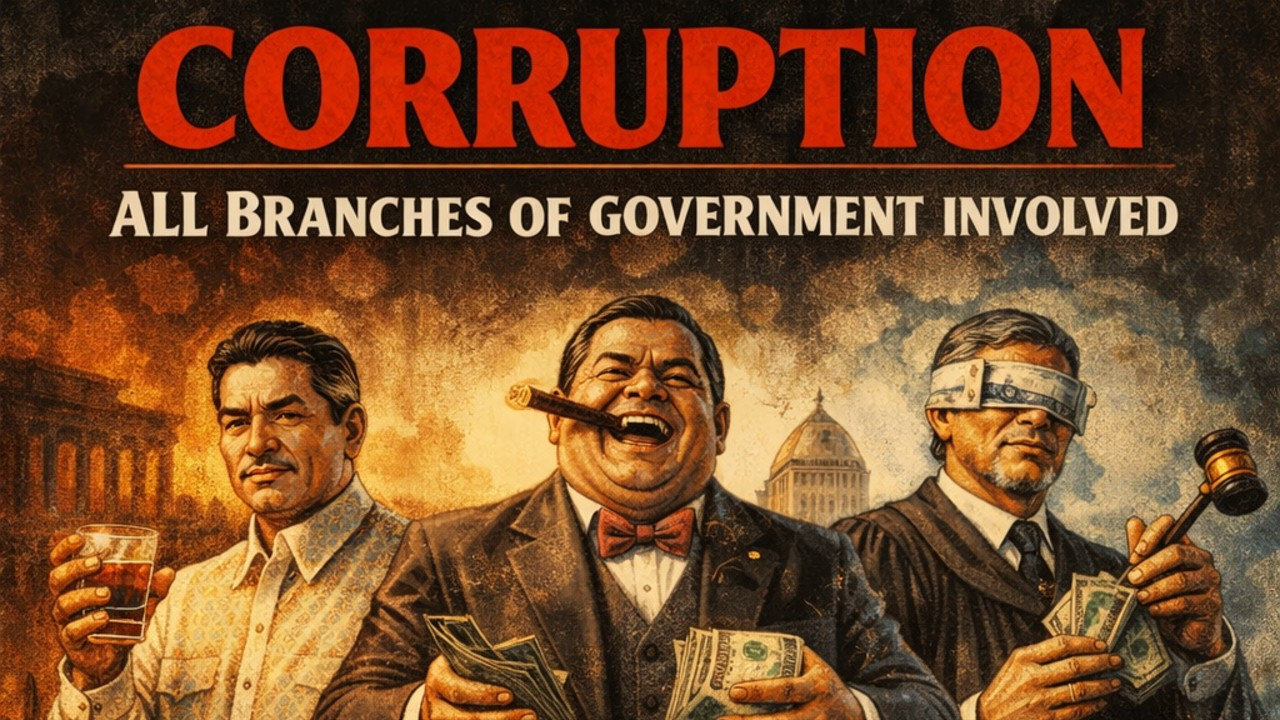
Corruption in the Philippines: A Nation Betrayed from Within
Corruption runs deep in all branches of government in the Philippines. It is no longer seen as an exception or an isolated abuse of power, but as a system that has embedded itself into everyday governance. Public office, which should be a position of service and responsibility, is too often treated as a personal business venture. Many officials enter government not to uplift the people, but to enrich themselves, their families, and their allies at the direct expense of the nation.
Resources meant for education, healthcare, infrastructure, and social programs are frequently siphoned off, misallocated, or wasted. Budgets that could have improved classrooms, equipped hospitals, or built safe roads disappear through overpricing, kickbacks, ghost projects, and political favors. As a result, ordinary Filipinos are left to struggle with overcrowded schools, understaffed hospitals, poor transportation, and inadequate public services. The country suffers not because it lacks money or talent, but because corruption drains both.
The effects of corruption are felt most deeply by the poor and middle class. While government officials enjoy privileges, protection, and wealth, millions of citizens are told to endure hardship and remain patient. Inequality widens as public funds meant to uplift communities instead concentrate power in the hands of a few. This imbalance breeds frustration, distrust, and hopelessness, weakening the social fabric of the nation.
One of the most painful consequences of corruption is its impact on Filipino families and the next generation. Parents raise their children with dreams of a better life, hoping they will find meaningful opportunities in their own country. Yet for many, those dreams are cut short. Jobs are scarce, wages are low, and advancement often depends not on merit, but on connections. As a result, millions of Filipinos are forced to leave their homes and families to work abroad, not out of choice, but out of necessity.
This mass migration is a silent tragedy. While overseas Filipino workers are praised as modern-day heroes, their departure is also a sign of failure at home. Corruption has robbed the country of its talent, creativity, and labor. Families are separated for years, children grow up without parents, and communities are hollowed out, all because opportunities that should exist locally have been stolen or denied.
Corruption does not only steal from the present. It robs the future as well. When public funds are misused, investments in education and innovation suffer. When laws are enforced selectively, trust in institutions collapses. When accountability is weak, wrongdoing becomes normalized. Over time, this creates a cycle where corruption sustains itself, passed down through political dynasties and protected by influence and fear.
A truly independent and prosperous Philippines cannot exist under these conditions. National strength is built on integrity, transparency, and service to the people. When those in power act primarily for themselves rather than for the public good, the very foundation of the nation is weakened. Democracy becomes hollow, development stalls, and the promise of progress remains unfulfilled.
Ending corruption is not easy, but it is necessary. It requires accountability, strong institutions, informed citizens, and leaders who prioritize service over self-interest. Until corruption is confronted and dismantled, the Philippines will continue to fall short of its potential. The dream of a nation where Filipinos can thrive in their own land will remain out of reach, not because it is impossible, but because it has been betrayed from within.