
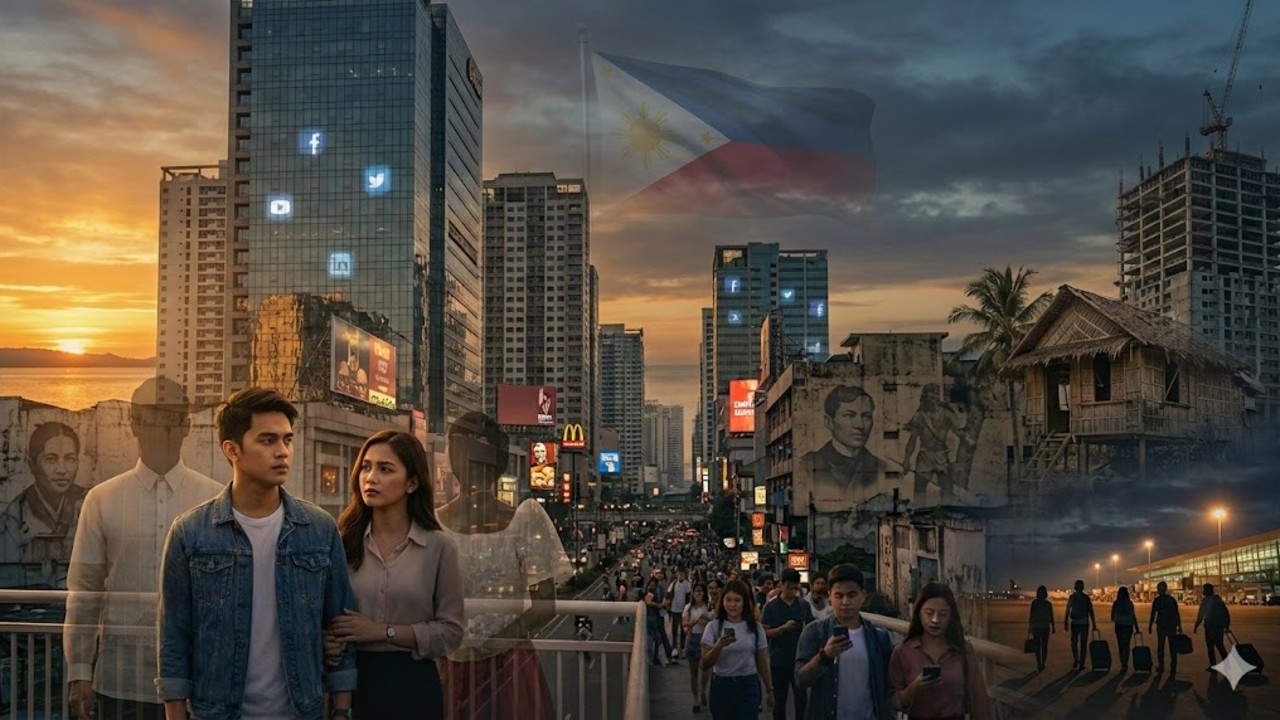
The Slow Death of Filipino Identity
A nation does not die in a single battle.
It dies slowly.
Not through invasion.
Not through open conquest.
But through erosion.
The slow death of Filipino identity is not dramatic. It is subtle. It happens in classrooms, in television shows, in shopping malls, in algorithms, in policies, and in the quiet choices we make every day.
And the tragedy is this:
We often participate in it without realizing.
Language Is the First Casualty
Language carries memory. It carries worldview. It carries soul.
Yet English dominates our business, higher education, legal system, and even aspirations. Fluency in English is treated as intelligence. Speaking Filipino or regional languages is often treated as informal or inferior.
Many young Filipinos today struggle to speak deep Filipino without inserting English. In some private schools, Filipino is treated as a minor subject, while foreign accents are celebrated.
This is not an argument against learning English. It is a tool. But when the tool replaces the tongue, identity weakens.
Countries like Japan, South Korea, and France mastered English while fiercely protecting their national languages. They did not surrender their linguistic identity to participate in global trade.
Why must we?
Culture Replaced by Consumption
Walk into a mall in Metro Manila.
Foreign brands dominate storefronts.
Foreign films dominate cinemas.
Foreign music dominates playlists.
Foreign fast food chains dominate diets.
The Philippines is one of the largest consumers of social media in the world. Filipinos spend an average of more than 3 hours daily on social platforms, among the highest globally. Algorithms shape tastes, humor, fashion, and political narratives.
But how much of that content strengthens Filipino history, literature, and indigenous traditions?
When identity becomes defined by imported trends, it becomes shallow. We begin to measure ourselves by foreign standards. Beauty standards shift. Lifestyle goals shift. Even success is defined by leaving the country.
If the Filipino dream is to migrate, what does that say about our national confidence?
Exporting Our People
Over 10 million Filipinos live or work abroad. Remittances contribute roughly 8 to 9 percent of our GDP annually.
These workers are heroes. They sacrifice for their families.
But what does it mean for a nation when its economic stability depends on exporting its citizens?
Brain drain is real. Nurses, engineers, seafarers, IT professionals, and skilled workers leave for better wages. According to government data, thousands of nurses leave each year, creating domestic shortages.
When our best minds build hospitals abroad, who builds ours?
When our engineers design infrastructure overseas, who designs our future?
Identity weakens when a nation’s most ambitious youth see their destiny elsewhere.
History Reduced to Decoration
Ask a young Filipino about Lapulapu.
About Apolinario Mabini.
About the Philippine American War.
About the true cost of colonization.
Many will know only fragments.
Our heroes appear on currency and in holidays. But how deeply are their sacrifices studied? How honestly do we confront our colonial past, not just Spanish rule, but American occupation and Japanese invasion?
The Philippine American War alone resulted in hundreds of thousands of Filipino deaths. Yet it receives minimal emphasis compared to other global conflicts.
A people disconnected from their history become easier to reshape.
Because memory is resistance.
Economic Structures Shape Identity
Identity is not only cultural. It is economic.
A nation dependent on imports consumes other people's creations.
A nation dependent on foreign corporations follows other people's rules.
A nation dependent on remittances relies on the sacrifice of those who left.
When we do not build our own industries, media networks, technology platforms, and research institutions, we absorb the worldview of those who do.
Economic dependency eventually becomes cultural dependency.
And cultural dependency becomes psychological dependency.
The Digital Colonization
In the modern age, colonization no longer requires soldiers.
It requires platforms.
Foreign-owned tech companies shape our information flow. They decide what trends. They amplify certain narratives. They monetize our attention.
Filipinos are among the most active users of Facebook, TikTok, and YouTube globally. Yet we do not own these platforms. We generate value for them. We provide content. We provide engagement. We provide data.
But control lies elsewhere.
When digital space is not sovereign, identity becomes programmable.
Education Without National Direction
Our education system often trains students for employment abroad rather than nation-building at home.
Courses are aligned with global labor demand.
Technical skills are exported.
Critical national development sectors remain underfunded.
Industrial research spending in the Philippines remains below 1 percent of GDP, far lower than innovation-driven nations like South Korea and Japan.
Without investment in science, engineering, and local innovation, we remain consumers, not creators.
A nation that does not create struggles to define itself.
The Psychological Shift
Perhaps the most dangerous sign of identity erosion is internalized inferiority.
When Filipinos assume foreign products are automatically better.
When foreign approval is valued more than local excellence.
When Western validation defines success.
When we mock our own accents but imitate others.
This mindset did not emerge overnight. It is the lingering effect of centuries of colonization.
Political independence was declared in 1898.
Formal independence was recognized in 1946.
But mental independence is still unfinished.
Is It Too Late?
No.
Identity does not vanish suddenly. It fades.
And what fades can be revived.
Revival begins with:
-
Strengthening Filipino languages in serious discourse
-
Teaching history with honesty and depth
-
Supporting local industries and creative sectors
-
Investing in science and manufacturing
-
Building platforms owned by Filipinos
-
Celebrating regional cultures as national strength
-
Redefining success as contribution to nation-building, not escape
Nationalism is not hatred of others.
It is love of one's own.
The slow death of Filipino identity is not inevitable.
But it will continue if ignored.
A nation survives not only by defending its borders, but by defending its memory, its language, its industry, and its confidence.
If we do not define ourselves, others will.
And that is how nations disappear.